The Pocket Watch Remembers
Before the wrist took over, time was carried. A case opened with a thumb, a face read in private, a chain that knew the line of a waistcoat better than any strap knows a wrist. The gesture was small and repeated: lift, glance, close. No one else was meant to see the hour unless you chose to show it, and even then the lid could snap shut mid-sentence.
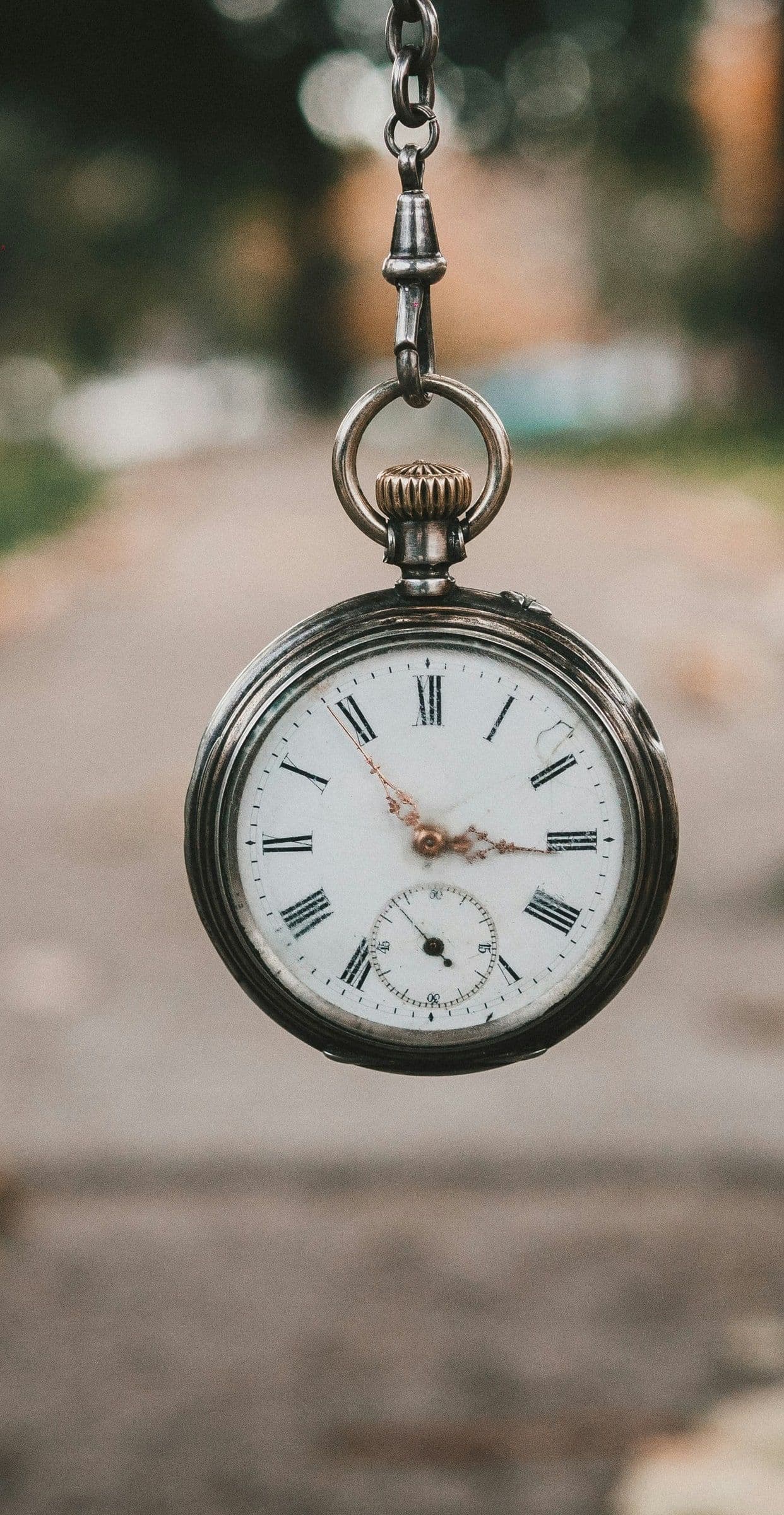
What the pocket watch remembers is not nostalgia. It is a different scale of attention: enamel that still holds its white, hands that were filed for a single hour mark, a hinge that has outlasted several owners without becoming loose. Each part was made to be looked at closely, then put away. The object assumed patience — the kind that has become scarce in rooms where every surface demands a reaction.
To look at one now is to see a machine that was never meant to perform in public. It was meant to be consulted, closed, and returned to a pocket where cloth and warmth kept the oil moving. The watch lived against the body, not on display at the end of an arm. Its tick was felt as much as heard, a faint pulse against the ribs during a long meeting or a slow walk.
The chain mattered as much as the movement. It caught the light differently from metal on a desk; it learned the drape of fabric across seasons. A fob could be plain or ornate, but its job was always the same: to keep time from falling, and to mark where a person stood in a room without speaking. Tangled links were a sign of life, not neglect.
Collectors sometimes speak of patina as if it were decoration. On a pocket watch, it is evidence of use: a bow worn thin where fingers habitually lifted, a case back with the ghost of a monogram polished almost away. Those marks are not flaws. They are the record of an object that was trusted to keep an appointment when trains and letters still depended on personal punctuality.
The dial, when you hold it at the angle the maker intended, reads differently from a wrist watch glanced in traffic. Roman numerals, a small seconds at six, a railroad track for minutes — each choice assumed a steady hand and a moment of stillness. Time was not shouted; it was confirmed. Subsidiary dials for days or phases of the moon were companions to that main reading, not distractions from it.
Repair at this level is conservation of habit. A mainspring replaced with the same temper as the original. A crystal that does not magnify the face beyond what the enamel can bear. The goal is not novelty but continuity: the same tick, the same weight in the palm, the same click when the lid shuts. Watchmakers who work on these pieces speak of returning a voice to something that had gone mute.
In rooms where everything is visible, a pocket watch offers a counter-rhythm. It can stay hidden through a long conversation and appear only when someone asks how late the evening has become. That discretion was once ordinary. It still feels like a kind of courtesy — a refusal to let the hour dominate the table when company is the real subject.
Comparison with modern timekeeping is not a lament. It is a reminder that instruments shape behaviour. A wrist lit at every notification trains urgency; a case that must be opened trains deliberation. Neither is morally superior, but they produce different rooms, different dinners, different thresholds for when one is allowed to leave.
What remains worth keeping is not the fashion of carrying time, but the intimacy of it. A machine small enough to disappear, precise enough to matter, and old enough to remind you that attention — once given to the hour — was a private act before it became a public signal. The pocket watch remembers that sequence, and quietly asks whether any of it should return.
Key Highlights
Time Carried
The case opened in private; the chain knew the cloth and the line of the waistcoat.
A Smaller Attention
Enamel, filed hands, and a hinge that has outlasted owners without loosening.
Consulted, Then Closed
The watch was never asked to perform for a room; it was meant to be put away.