Horn and Brushed Steel
Horn and brushed steel belong to the pocket and the palm, not to the pedestal. A lighter that opens without a flourish, a small knife whose handle has already learned the thumb, a key that does not announce its cut — these are objects finished for the hand. Theatre would give them shine they do not need and weight they cannot justify. Restraint gives them a temperature and a grain that make sense when the fingers find them without looking.
Horn is not decoration when it is used honestly. It is a material with direction, with slight variation from piece to piece, with a warmth metal alone rarely holds. A handle in horn sits differently in cold air than a handle in polished steel. It takes oil from the skin. It dulls in a way that looks kept rather than neglected. Cheap imitations try to freeze that look into a pattern; real horn keeps changing under use, which is precisely why it suits objects meant for years rather than for a single season of display.
Brushed steel refuses the mirror. A linear grain catches light as a soft band rather than as a point. Fingerprints show less. Scratches join the grain instead of interrupting a reflection. On a lighter case, a knife bolster, a key’s spine, the brush is a decision against spectacle. It says the object will be held in ordinary rooms, dropped into ordinary pockets, set down on wood that is not a showcase. Polished steel can be beautiful. Brushed steel is companionable. For small objects, companionable is the higher compliment.
Scale keeps theatre out. An oversized lighter becomes a prop. A knife that looks ready for a demonstration was never meant for a pocket. The objects that earn their place are slightly smaller than the hand expects and then prove exact in use: the flint answers, the blade opens with a pressure that feels rehearsed by the maker, the key turns without bargaining. Finish follows function so closely that decoration would be a confession of doubt.
There is a kinship with complications read as mechanism rather than as boast — the same close attention that shapes anatomy of a complication. Small steel and horn objects, like serious movements, fail when they are finished for the photograph. They succeed when every surface that meets the hand has been considered as contact, not as display. A crown, a lighter wheel, a knife pivot: each is a place where the body teaches the object what the object must become.
Pockets are harsh editors. They fill with lint, with other metal, with the day’s small collisions. An object that cannot survive a pocket was never finished for life. Edges that catch lining, finishes that flake, mechanisms that fill with dust and then sulk — these are workshop fantasies that die in wool. Horn and brushed steel, properly fitted, accept the pocket as their climate. They emerge looking like themselves, only more so.
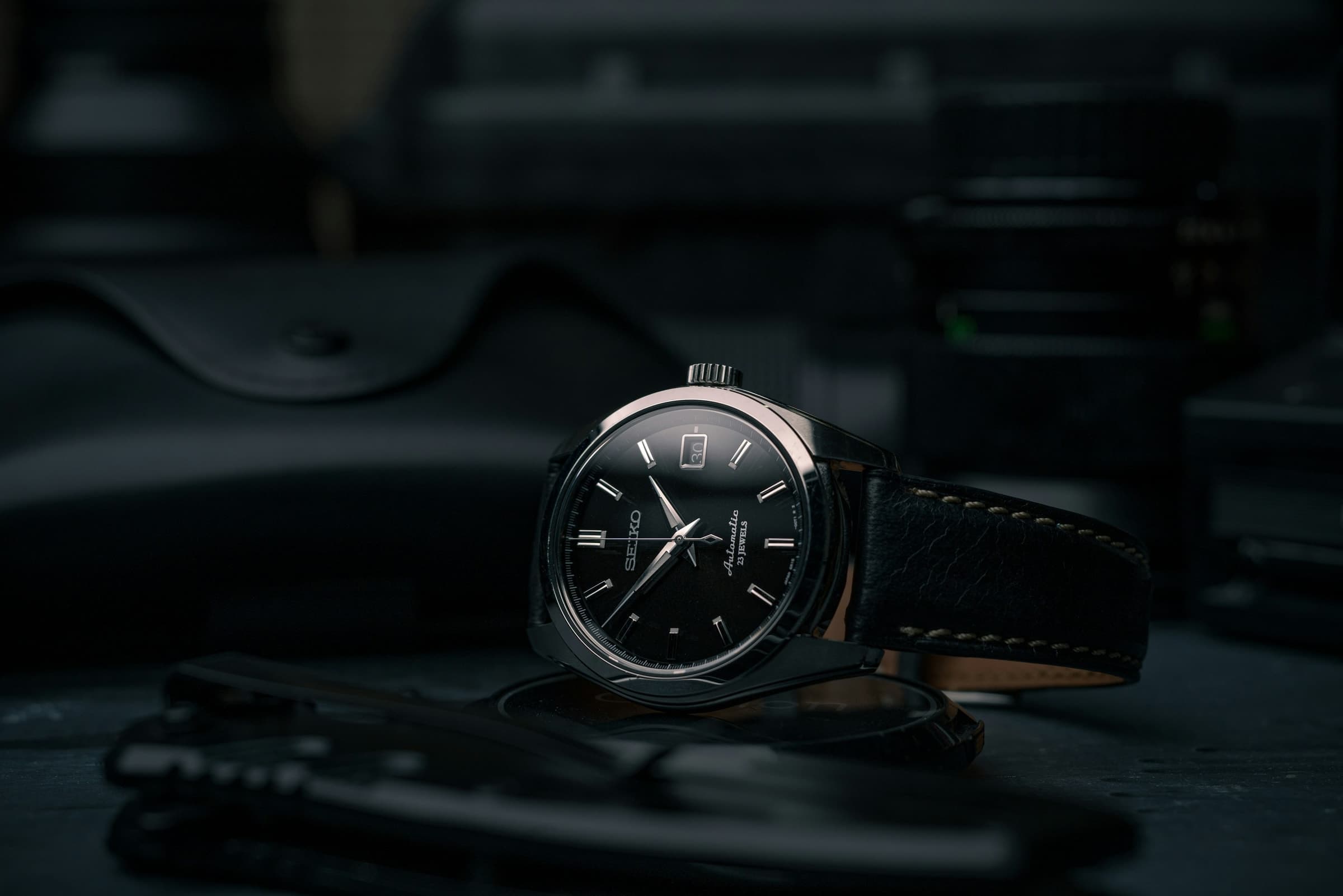
On a dark wood table beside a watch, the trio of materials should agree. Horn should not fight the strap. Steel should not outshine the case. The composition is accidental only if the owner never looked. Agreement here is not matching; it is shared refusal of glitter. The same refusal that keeps a garage bay from becoming a showroom lives in these smaller registers — the quiet of the garage before dawn, where tools and machines are ready without being arranged for witnesses.
Sound and action complete the finish. A lighter that clicks too brightly becomes a performance each time it is used. A knife that snaps open for effect belongs to a different vocabulary. The better actions are almost private: a soft resistance, a settled stop, a flame that appears without a speech. People nearby should not be enlisted as audience. The object should serve and return to the pocket with as little narrative as a well-cut key.
Care is simple because the materials were chosen for use. Horn wiped, steel left mostly alone, joints oiled when they ask. Over-care is another form of theatre: the object becomes a patient rather than a tool. Under-care shows quickly in neglected pivots and dried horn. The middle path is the same path as with travel leather and soft cloth — attention without anxiety, maintenance without ceremony.
What remains in the hand after years is a small map of decisions: where the brush still runs true, where the horn has darkened, where the thumb has polished a brighter path without ever meaning to. That map is the opposite of theatre. It is the record of an object that was finished for the hand and then given a life long enough to prove the finish was right.
Key Highlights
Finished for the Hand
Temperature, grain, and action judged in the palm — not on a pedestal under a lamp.
Theatre Refused
Brushed steel and honest horn keep small objects companionable instead of spectacular.
Metal Beside Horn
Pocket tools that agree with watch and wood by sharing a refusal of glitter.