The Mediterranean’s Most Exclusive Villas
Along that coast, light is the material. A house is judged by how it takes the afternoon, and by how little of it the road can see. Walls are thick for heat and for discretion. Openings are placed with the patience of someone who has watched the sun cross the same terrace for years and knows which hour belongs to which room.
The villas that still set the standard are not the newest. They are the ones with a garden between the gate and the water, and a plan that refuses the neighbour’s window. Newness can impress from the drive. It rarely survives the scrutiny of August, when every angle is tested and every borrowed view becomes an argument someone will eventually have to settle.
Privacy, here, is a matter of siting. The sea does the rest. A house turned correctly needs fewer fences because the land itself drops away or turns a corner. Cypress and olive do what architecture cannot — they slow the eye, they hold shadow, they make the approach longer than the map suggests. By the time a guest reaches the terrace, the road has already been forgotten, which is the first test of a successful villa.
Interiors follow the same logic. Rooms are few and generous rather than many and demonstrative. Stone floors carry coolness into evening. Canvas and linen age without embarrassment. The pool, when there is one, is placed so that water reflects sky toward the house, not traffic toward the neighbours. It is for living, not for being seen from the lane above — a distinction that separates houses meant for families from houses meant for photographs.
Service on these coasts is often invisible because it must be. Staff who understand the rhythm of a short season know when to appear and when to leave a table untouched. Kitchens are planned for real meals, not for show. Wine stays in a cellar that does not advertise itself. The best villas feel as if they have always been staffed this way, even when they have only recently passed to new hands — because the house itself teaches the pace.
Light moves through the day like a programme no one needs to announce. Morning belongs to shaded loggias and coffee before heat. Midday retreats to rooms with depth. Late afternoon is the reason the terrace exists — when colour returns to stone and the sea shifts from silver to ink. Dinner follows without hurry because the house has already arranged the hours. That is what exclusivity feels like from inside: not rarity for its own sake but time shaped correctly.
Neighbours, when they exist, are part of the architecture’s quiet negotiation. Shared views are avoided; shared walls are tolerated only when stone is thick enough to forget. The most respected houses on any bay are the ones you might pass for years without knowing who sleeps there — not from secrecy alone, but from a plan that never turned the best room toward anyone else’s curiosity.
Storms arrive and pass; the house remains. Shutters close with the confidence of habit. Drainage was considered before decoration. Generators, when needed, sit where they cannot be heard from the terrace. These are not romantic details; they are the difference between a villa that survives a decade and one that becomes a renovation project the moment the season turns harsh.
When the season ends, the villa does not disappear. It waits. Furniture is covered. The garden is trimmed back to essentials. The sea continues. A caretaker may walk the terraces once a week, more habit than duty, keeping the place believable for its return. What remains in memory is not a list of rooms but the quality of afternoon — how light entered, how silence held, and how completely the house refused to be anything other than a private conversation between land and water.
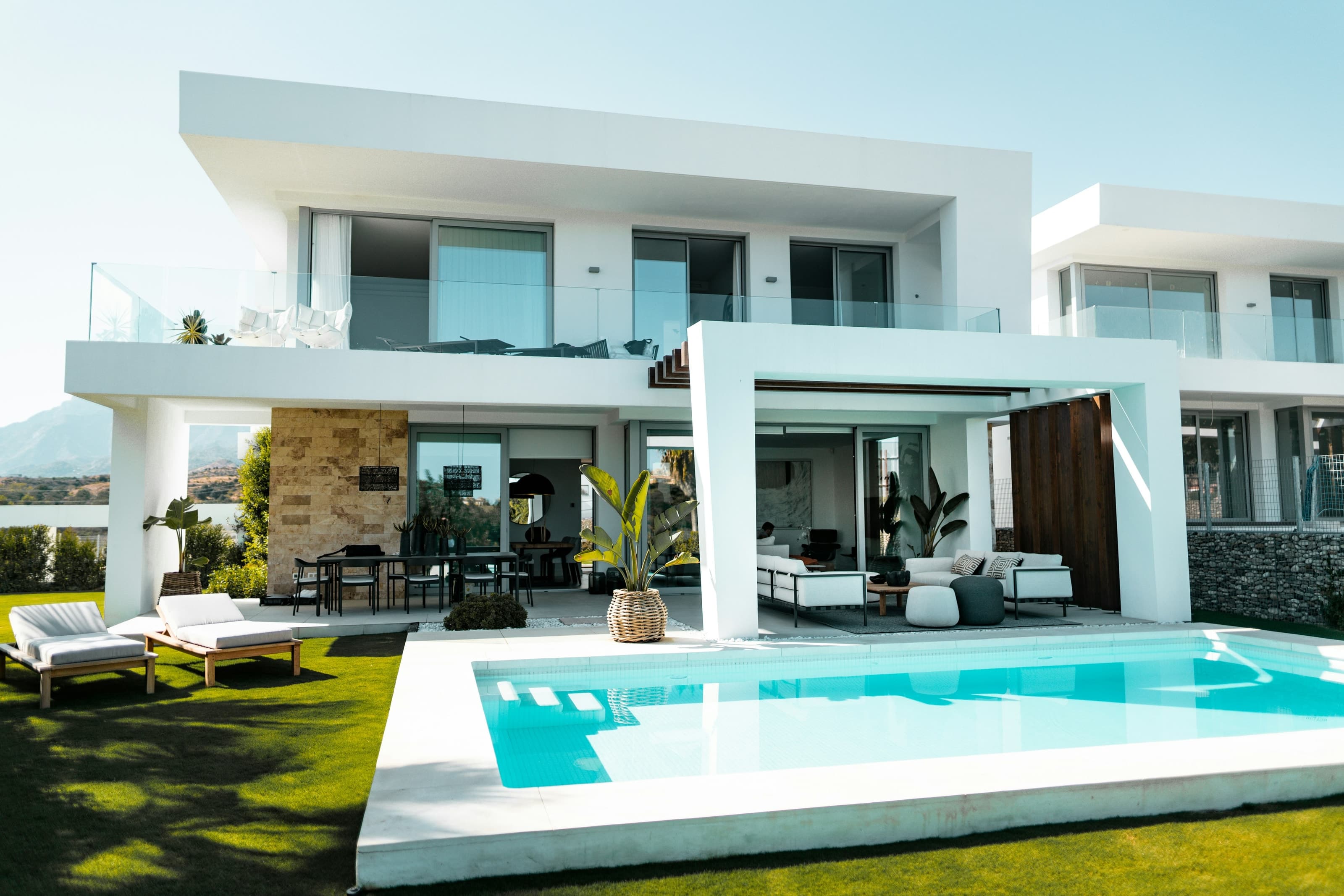
Key Highlights
Light as Material
The afternoon decides whether a room was planned with patience or merely built to impress from the drive.
A Garden at the Gate
The best houses still keep a long distance between the road and the water, letting olive and cypress do the work.
Sited for Privacy
The view is held toward the sea while the neighbour’s window is never invited into the best room.