Luxury Apartments in Dubai
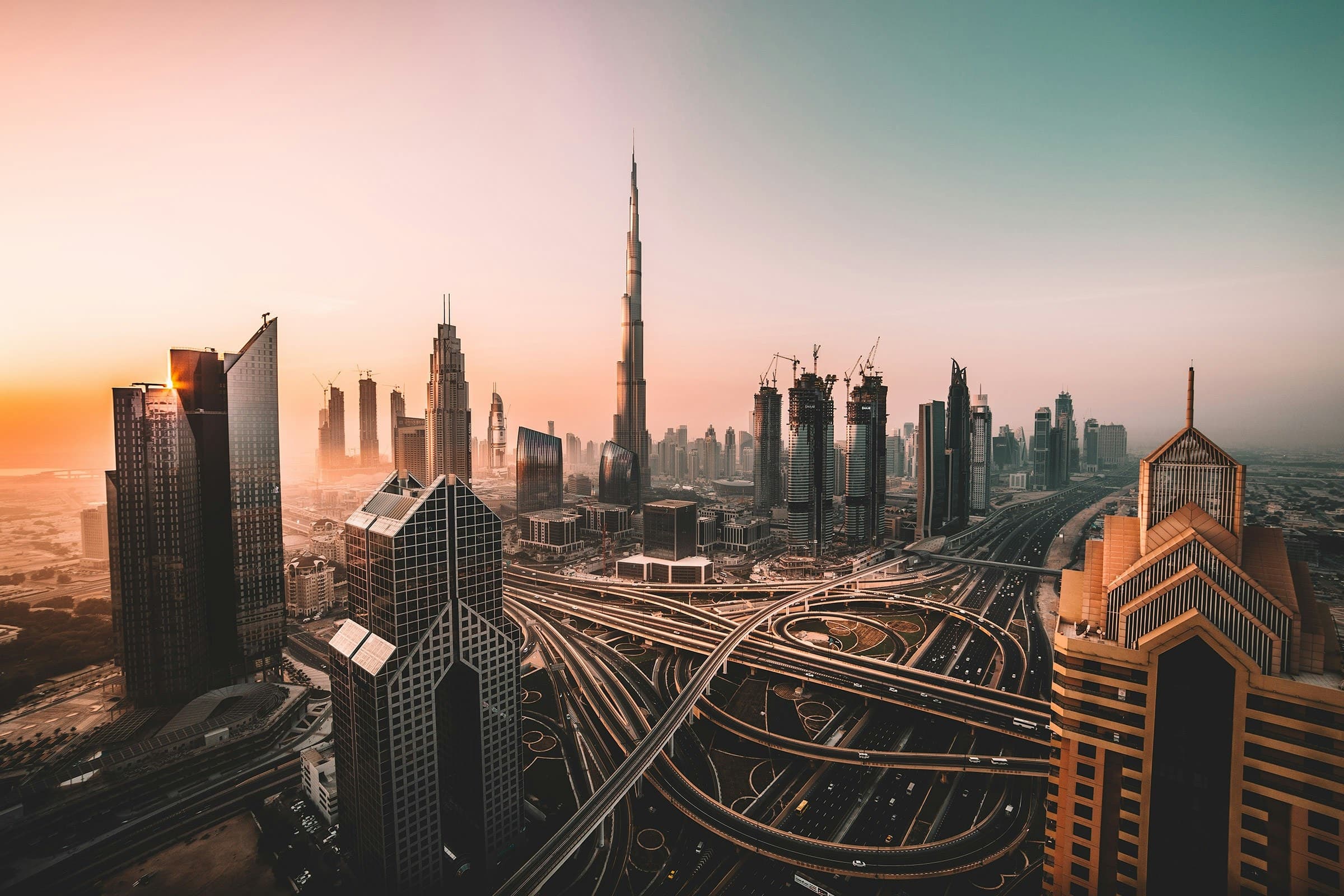
The towers are a climate strategy as much as a skyline. Shade, glass, and a life arranged well above the heat of the street. From the ground they read as ambition; from inside they read as engineering: how air moves, how sun is refused, how a room can remain cool while the city outside is bright enough to bleach colour from stone.
An apartment at that height takes the Gulf as its view and the evening as its hour. The city is conducted from a room that has already left the pavement. Morning belongs to the sea haze and the slow return of detail on the horizon. Afternoon is for drawn shades and quiet work. The social day begins when the light softens and the temperature drops enough to open a terrace door without flinching.
What distinguishes them is not height alone. It is the plan: how the wind is met, and how the day is kept out until it is wanted. Corridors are short. Service areas are sealed from living spaces so the machinery of comfort does not intrude on the view. Bedrooms sit where the sun arrives last. Kitchens are sized for staff or for no one, depending on how the owner actually lives, not how a render suggests they might.
Glass is treated as a material with opinions, not as a default wall. Some facades are fritted so the city becomes a texture rather than a glare. Others step back in terraces that create shade for the floor below as well as for themselves. The best apartments feel like they were drawn from the inside out: first the room where you stand at dusk, then the shell that protects it.
Sound is the lesser-known luxury. High above the junctions, the city becomes a low hum, broken by occasional horns that read as distant rather than urgent. Double assemblies of glass turn that hum into a backdrop suitable for conversation. The apartment does not pretend to be a villa; it offers something else: the whole coast as a single window, the sense that you are above the grid rather than inside it.
Circulation in these buildings is part of the etiquette. Separate lifts for residents and guests, lobbies that do not require you to cross a mall to reach home, parking that delivers you to your floor without a parade through public space. The arrival sequence matters because at this scale, dignity is measured in how few strangers share your threshold, and how quickly the city’s noise falls away once the door closes.
Interiors tend toward calm surfaces because the view is already the ornament. Pale stone, linen, wood that does not fight the light. Where art appears, it is often large and simple, holding its own against the scale of the glass. The mistake is to compete with the horizon; the success is to frame it without clutter.
Life here is seasonal in a different register from temperate cities. Ramadan shifts the rhythm of evenings. Summer concentrates activity in cooled rooms and late walks when the air thins. The apartment is the stable point: the same plan, the same orientation, while the city outside rotates through its calendar of events and absences.
What owners describe, when they are precise, is not square footage but orientation: which direction the sun is refused from, whether the Gulf is a wide band or a sharp line, how many minutes of amber light the living room receives before the towers across the water begin to glow on their own. Those details are the real architecture.
The towers will continue to rise, but the apartments that matter will remain the ones that understood climate and conduct before they understood marketing. A life well above the city is not an escape from it. It is a chosen distance: close enough to participate, high enough that participation becomes intentional rather than accidental. The view is constant; the decision to look is not.
Key Highlights
Built for the Climate
Shade, glass, and air movement are part of the original plan, not corrections added after the first summer.
Above the Pavement
The day is conducted from rooms that have left the street’s heat and noise below the threshold.
The Evening Hour
The Gulf supplies the view; the apartment waits until the light softens before it asks the terrace to work.