An Alpine Morning
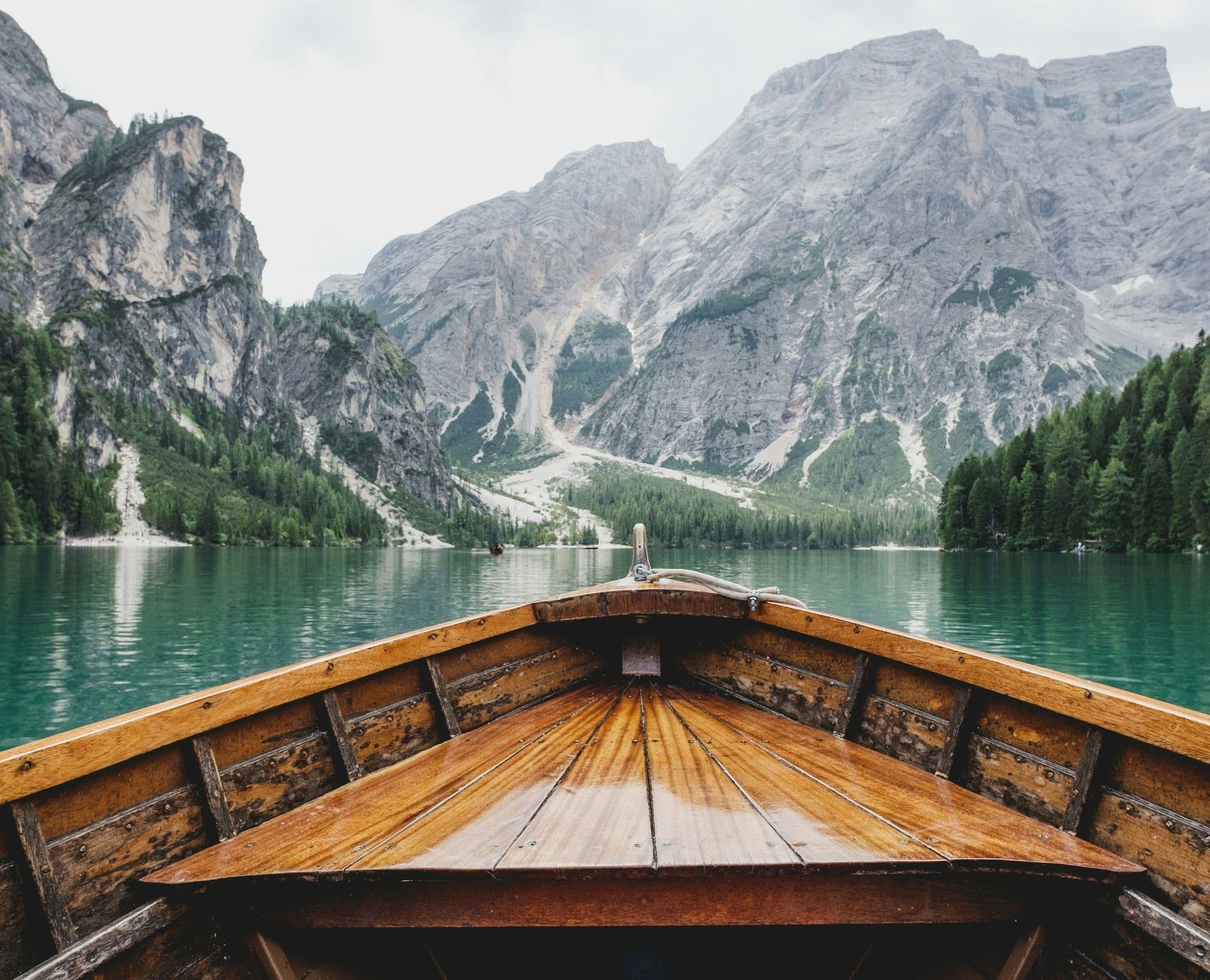
The lake is not yet a destination. It is a surface that has not been claimed. Wood along the bow is cool under the hand. The mountains hold their outline without the glare that will come later, when the sun finds the snow on the upper ridges and turns the whole basin into something brighter than anyone needs.
At this hour the water reads as depth rather than reflection. A ripple from the oar or the paddle disappears before it reaches the far reeds. The air carries pine and cold stone. Sound travels farther than it will once the valley wakes — a bird, a gate somewhere on the slope, the faint shift of timber in an old boathouse that has been waiting for this light all night.
A morning like this asks for almost nothing: a short crossing, a landing that is not on a map, the decision not to hurry the return. The craft is old enough that the sound of the water against it is part of the reason to be out. New boats are faster and drier. They do not give you the same conversation with the lake, the same patience in the stroke.
Those who know these lakes treat the first hour as a private season. The hotels have not yet set their tables on the terrace. The paths above the shore are still damp. You share the water with people who rise without announcement — a fisherman who nods once, a pair of swimmers who treat the cold as a discipline rather than a challenge. No one is performing for the afternoon crowd that will come later with cameras and lists.
The landing, when you choose it, is a matter of instinct. A cove where the trees lean in. A strip of gravel that does not advertise itself from the main shore. You tie off to a root or a iron ring that has been there longer than any name on a deed. Coffee from a thermos tastes different here: less about the roast than about the steam rising into air that has not yet been warmed by engines.
What is kept is the interval. Between the first light and the first engine on the far shore, the lake still belongs to whoever was willing to rise for it. That interval has a shape. It begins when you can see without a lamp and ends when the first white wake cuts the mirror. To miss it is to arrive at the lake when it has already become a schedule for someone else.
The return crossing is often slower than the way out. Not from fatigue but from reluctance to close the hour. The mountains begin to take on contrast. A chalet window catches sun. You hear, faintly, the day assembling itself — a delivery van on the road above, a dog, the distant rhythm of a ski lift that will not matter until winter but is already part of the valley’s machinery.
Wood dries on the bow as you approach the boathouse. Someone may be there to help with the line, or the place may still be locked and yours alone. Either way the ritual is the same: cover the craft, wipe the seats, leave the water as you found it. The luxury is not the boat. It is the discipline of arriving before the lake has been spoken for, and leaving it ready for the next person who understands the same clock.
Later, at breakfast, the lake will be visible through glass and discussed as scenery. That is fine. The same water will carry ferries and swimmers and the bright noise of midday. What remains is the memory of cool timber and unbroken surface, and the knowledge that for one hour the Alps were not a backdrop but a room you entered by water, without an audience and without hurry.
Key Highlights
Before the Claim
The surface has not yet been turned into a schedule, and the first wake still belongs to whoever rose for it.
A Short Crossing
The landing need not be marked on any map to be the right one when instinct and timber agree.
The Interval Kept
Between first light and the far shore’s engines, the lake stays private for those who know its clock.